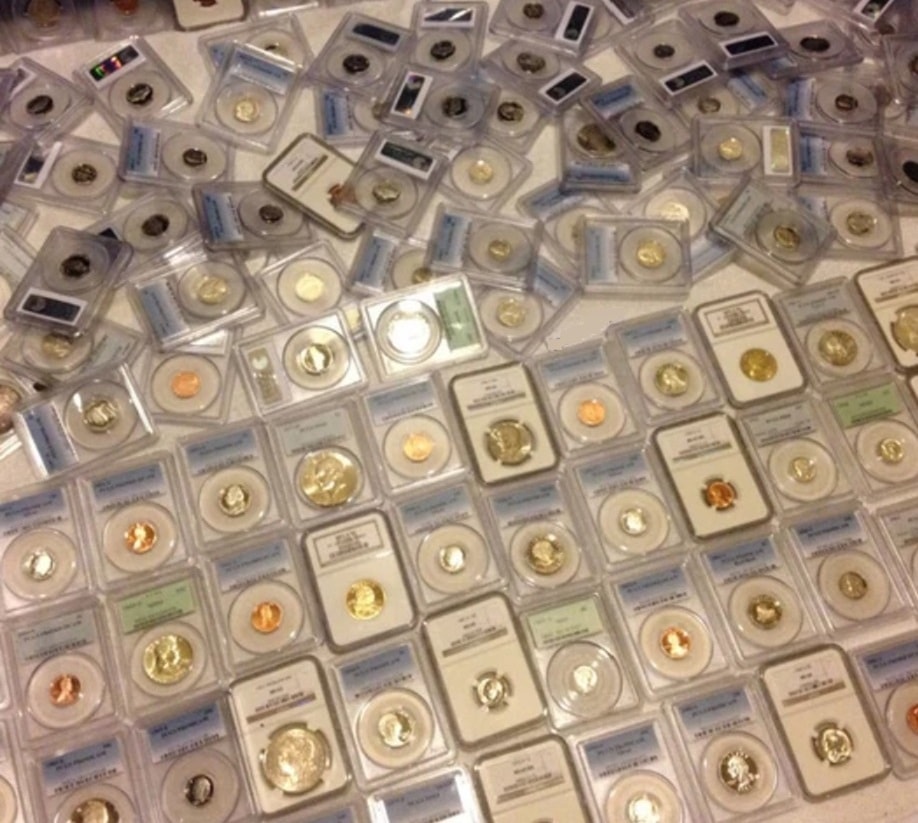
If you have ever tried to sell a coin and heard the words "PCGS," "NGC," or "CAC," you may have wondered what any of it means and whether it actually affects what you get paid. The short answer is yes, significantly. This guide explains the grading system from the ground up so you walk in knowing exactly what you have.
What Is Coin Grading?
Coin grading is the process of evaluating a coin's condition and assigning it a numeric grade on the Sheldon scale, which runs from 1 (barely identifiable) to 70 (perfect, no imperfections visible even under magnification). The grade directly determines market value. A Morgan Dollar in MS-60 and the same date in MS-65 can differ in value by thousands of dollars.
Grades fall into two broad categories:
- Circulated grades (1–58): The coin has been used in commerce and shows wear. Grades like Good (G-4), Fine (F-12), Very Fine (VF-20), and Extremely Fine (EF-45) describe how much detail remains.
- Mint State grades (60–70): The coin has never circulated. MS-60 through MS-70 describe the number and severity of contact marks, luster quality, and eye appeal.
For proof coins, the scale runs PF-60 through PF-70. Proof coins are struck with specially polished dies on polished planchets and were never intended for circulation.
What Is PCGS?
The Professional Coin Grading Service (PCGS) was founded in 1986 and is one of the two most respected third-party grading services in the world. When you submit a coin to PCGS, a team of expert numismatists examines it independently, reaches a consensus grade, and seals the coin in a tamper-evident plastic holder called a slab. The slab displays the grade, the coin's description, and a certification number you can verify online.
PCGS grades carry significant weight in the marketplace. A coin graded PCGS MS-65 will typically sell for more than the same coin in a generic holder or raw (ungraded), because buyers trust the grade and the authentication. PCGS also guarantees the grade and authenticity of every coin it certifies.
PCGS Authorized Dealers are vetted businesses that meet PCGS standards for numismatic knowledge and ethical practice. Clemson Coins and/or its owner is a PCGS Authorized Dealer.
What Is NGC?
The Numismatic Guaranty Company (NGC) was founded in 1987 and is the other major third-party grading service. NGC and PCGS are widely considered equals in the marketplace, and most serious collectors and dealers accept both without question.
NGC grades coins, tokens, medals, and world coins, and it is the official grading service of several major numismatic organizations including the American Numismatic Association (ANA). Like PCGS, NGC seals graded coins in tamper-evident holders with a certification number.
One practical difference: NGC tends to have a broader acceptance for world coins and ancient coins, while PCGS has historically been dominant in U.S. coins. For most common U.S. issues, the two services are interchangeable in terms of market acceptance.
NGC Authorized Dealers meet NGC's standards for expertise and ethics. Clemson Coins and/or its owner is an NGC Authorized Dealer.
What Is CAC?
The Certified Acceptance Corporation (CAC) was founded in 2007 by John Albanese, one of the founders of PCGS. CAC does not grade coins from scratch. Instead, it reviews coins that have already been graded by PCGS or NGC and applies a small green sticker to the holder if the coin is solid for its grade or better.
Think of it as a second opinion from one of the most respected eyes in the business. A CAC sticker means the coin is not just technically correct for its grade but is among the better examples at that grade level. In the marketplace, CAC-stickered coins consistently sell for a premium above non-stickered coins of the same grade.
CAC Authorized Dealers are recognized for their expertise in evaluating high-quality coins. Clemson Coins and/or its owner is a CAC Authorized Dealer.
What Is CACG?
CACG (CAC Grading) is CAC's own full grading service, launched in 2023. Unlike the original CAC sticker program, CACG grades coins directly from scratch and seals them in its own tamper-evident CACG holders with a numeric grade on the 70-point Sheldon scale.
CACG was created to bring the same exacting standards that made CAC stickers so respected into a complete grading service. Because CACG is backed by the reputation of John Albanese and the CAC organization, its grades are gaining rapid acceptance among advanced collectors and dealers. A CACG-graded coin carries the implicit endorsement that the coin is not only authentic and accurately graded, but represents a high-quality example.
For sellers, CACG holders can add credibility and value to coins that might otherwise be dismissed as raw. For buyers, a CACG grade offers an additional layer of confidence beyond PCGS or NGC alone.
CACG Authorized Dealers meet CACG's standards for numismatic expertise and ethical practice. Clemson Coins and/or its owner is a CACG Authorized Dealer.
What Is PMG?
Paper Money Guaranty (PMG) is the world's leading third-party grading service for paper currency. PMG authenticates and grades U.S. Federal Reserve Notes, National Bank Notes, Large-Size Type Notes, Confederate currency, Fractional currency, Military Payment Certificates, obsolete state and territorial currency, error notes, and world banknotes from virtually every country and era.
PMG uses a 70-point scale that mirrors the Sheldon coin grading scale. Grades run from Poor (P-1) at the bottom through Fine, Very Fine, Extremely Fine, and up to Gem Uncirculated (GEM UNC 65 EPQ) and beyond. The EPQ designation (Exceptional Paper Quality) is awarded only when a note retains its original paper surfaces with no cleaning, pressing, or restoration. An EPQ note commands a significant premium over the same grade without it.
A PMG holder includes a certification number that can be verified on PMG's registry, making it easy for buyers to confirm authenticity and grade before purchasing. For high-value notes, that verification is often the difference between a sale and a pass.
If you have old paper money, even a single note tucked in an estate, a PMG grade can dramatically affect what it is worth. A 1928 $100 Federal Reserve Note in PMG 65 EPQ is worth far more than the same note raw or in a lower grade. The same is true for rare National Bank Notes, early large-size currency, and scarce error notes where condition is everything.
PMG Authorized Dealers are vetted for their expertise in paper currency authentication and valuation. Clemson Coins and/or its owner is a PMG Authorized Dealer.
What Is PCGS Currency?
PCGS Currency is the paper money grading division of the Professional Coin Grading Service, the same organization behind PCGS coin grading. PCGS Currency grades U.S. and world banknotes, obsolete currency, fractional currency, military payment certificates, and other paper money collectibles using the same 70-point scale familiar to coin collectors.
PCGS Currency authenticates and grades each note, then seals it in a tamper-evident holder with a numeric grade and a certification number that can be verified online. Notes graded by PCGS Currency carry the same institutional credibility as PCGS-graded coins, making them easier to buy, sell, and price with confidence.
One important distinction: PCGS Currency and PMG are the two dominant services in the paper money market, much like PCGS and NGC are in coins. Both are widely accepted, and serious collectors and dealers recognize grades from either service. For U.S. large-size notes, small-size notes, and high-value world currency, a PCGS Currency or PMG grade can significantly increase the note's marketability and realized price compared to selling it raw.
If you have old paper money and are wondering whether grading makes financial sense, the answer depends on the note's estimated value and condition. For notes potentially worth $200 or more, professional grading by PMG or PCGS Currency is often worth the cost. We can advise you on whether grading makes sense for specific notes in your collection.
PCGS Currency Authorized Dealers are vetted for their expertise in paper money authentication and valuation. Clemson Coins and/or its owner is a PCGS Currency Authorized Dealer.
What Are CGC and PSA?
CGC (Card Grading Services by CGC) is a leading grading service for trading cards, sports cards, and non-sports cards. CGC authenticates and grades cards, sealing them in tamper-evident holders with a numeric grade. Professional Sports Authenticator (PSA) is the other leading grading service for sports cards, trading cards, and memorabilia. Both services use tamper-evident holders and numeric grades.
Clemson Coins holds authorization from both CGC and PSA, which means we evaluate and purchase graded sports cards, trading cards, and non-sports cards in addition to coins and currency.
CGC and PSA Authorized Dealers are vetted for their expertise in trading card authentication and valuation. Clemson Coins and/or its owner is a CGC and PSA Authorized Dealer.
Why Does the Grading Service Matter?
Not all graded coins are equal in the marketplace. A coin in a PCGS, NGC, CACG or with a CAC sticker/holder will typically sell for more than the same coin in a lesser-known or unrecognized holder, because buyers trust the grade. Some third-party services have reputations for loose or inconsistent grading, which means their grades carry less weight.
When you bring a graded coin to Clemson Coins, we know exactly what each holder is worth in the current market. We pay based on the actual grade and the service that issued it, not a flat rate that ignores the difference between a PCGS MS-65 and a generic MS-65.
Raw Coins vs Graded Coins: Which Is Worth More?
It depends on the coin. For common-date bullion coins like American Gold Eagles or Silver Eagles, the grading cost often exceeds the premium you would gain, so raw coins are perfectly fine. For key dates, low-mintage issues, high-grade examples, and coins with significant numismatic value, a PCGS, NGC, CACG or CAC sticker/grade can add hundreds or thousands of dollars to the sale price.
If you have a coin you think might be valuable, bring it in. We will tell you honestly whether it is worth grading before you sell, or whether the raw value is already at its ceiling.
The Ten Credentials: Why It Matters
Most coin dealers hold one or two credentials. A few hold three or four. Clemson Coins holds all ten major credentials in the industry:
CCE, CDHCD, CDNX, JHJ, PCGS, NGC, CAC, CACG, PMG, CGC, and PSA.
No other dealer in the Upstate of South Carolina holds this combination. What does that mean for you?
It means we can accurately evaluate and pay top dollar for virtually everything: U.S. coins, world coins, paper currency, bullion, and sports cards. It means we are vetted by the most respected organizations in the hobby. And it means when we make you an offer, it is based on real expertise, not a guess.
What to Do Before You Sell a Graded Coin
Ready to Find Out What Your Coins Are Worth?
Whether your coins are raw, graded by PCGS or NGC, or stickered by CAC, Clemson Coins will give you an accurate, honest offer based on current market values. No appointment needed. Walk in during business hours.
Clemson Coins, Currency and Bullion Pendleton, South Carolina We Pay More, Always!