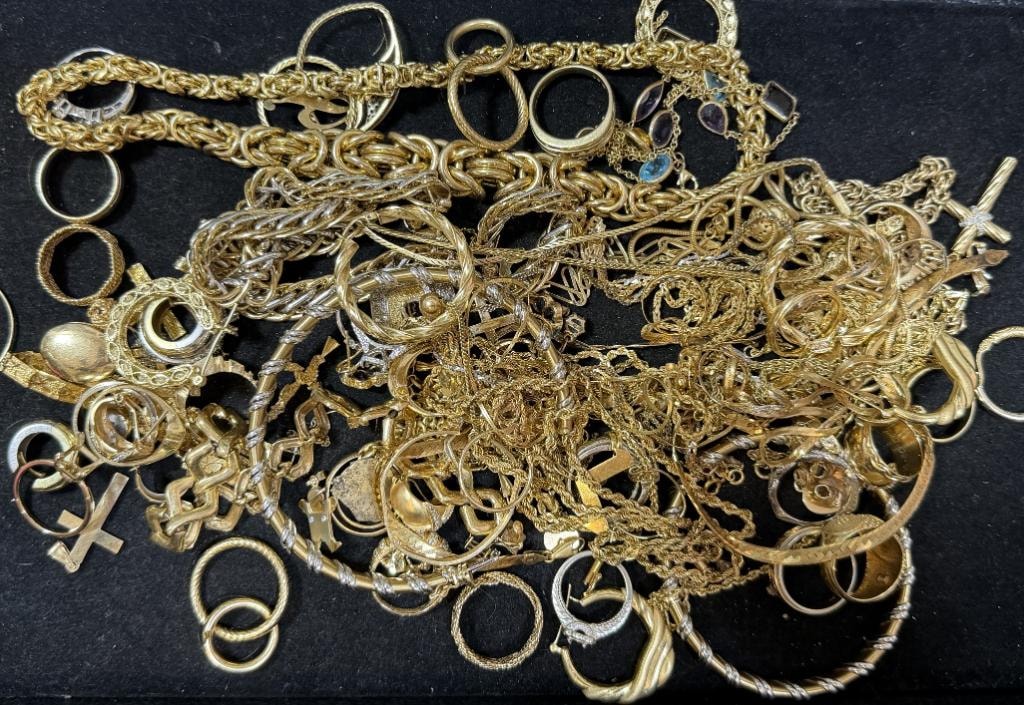
If you have gold or silver jewelry you no longer wear, inherited pieces you want to convert to cash, or broken and damaged jewelry taking up space, Clemson Coins, Currency & Bullion in Pendleton, SC will evaluate it and make a competitive same-day offer.
We are Upstate South Carolina's most credentialed precious metals dealers, pricing jewelry against live gold and silver spot prices, not arbitrary store estimates or lowball offers which many Greenville merchants are known for.
No other Upstate dealers match our credentials.
What Jewelry Clemson Coins, Currency & Bullion Purchases
Gold Jewelry We Purchase:
All karat gold jewelry is purchased based on gold content and current spot price:
- 10 karat gold (41.7% gold): rings, chains, bracelets, earrings
- 14 karat gold (58.5% gold): the most common jewelry karat in the U.S.
- 18 karat gold (75% gold): higher-end jewelry, often European
- 22 karat gold (91.7% gold): some imported and antique jewelry
- 24 karat gold (99.9% gold): pure gold items, some Asian jewelry
- Gold-filled items: priced differently from solid gold; Joe will identify and explain the difference
- Dental gold (crowns, bridges): purchased based on XRF and knowledge about gold content
Silver Jewelry We Purchase:
- .925 Sterling silver: all sterling jewelry including rings, chains, bracelets, necklaces, cufflinks
- .999 fine silver jewelry: higher purity items
- Mexican silver (.950) and other international silver marks
- Coin silver (.900): older American silver items predating the sterling standard
Other Precious Metal Items We Purchase:
- Platinum jewelry: rings, settings, mountings
- Sterling silver flatware: sets, individual pieces, serving pieces
- Sterling holloware: tea sets, trays, candlesticks
- Gold and silver watches: solid gold and sterling cases; not plated
- Gold coins set in jewelry: valued as coins plus setting metal
- Gold-plated or gold-filled items (only the thin gold layer has value, not the base metal)
What Clemson Coins Does NOT Buy:
- Silver-plated items
- Costume jewelry
If you're unsure whether your items are solid gold or plated, bring them in. We can test them on the spot.
How Gold Jewelry Is Priced:
Gold jewelry is priced on three factors:
Karat (purity): The karat mark stamped inside a ring or on a clasp (10K, 14K, 18K, or 585, 750 in European marking) tells you the gold percentage. Higher karat means more gold per gram and higher value.
Weight (grams): The gold content in grams is calculated by multiplying the piece's weight by the karat percentage. A 14K ring weighing 5 grams contains approximately 2.9 grams of pure gold.
Current spot price: The calculated pure gold weight is multiplied by the current gold spot price per gram. The dealer's buy price is a percentage of that calculation. We purchase jewelry at competitive percentages of spot; the exact percentage depends on item type and market conditions.
The formula: Weight (g) x Purity % x Spot price per gram x Buy percentage = Your offer.
You can check the live gold spot price on Kitco.com before you visit. We will show you the math.
Does Gemstone Value Add to the Offer?
For most pieces, no. Standard commercial small (under 10pts) diamonds and common gemstones (cubic zirconia, synthetic stones, small commercial diamonds, glass colored stones) add little to a melt-based offer because they have limited resale value in loose form. However, larger diamonds are indeed figured into the equation or you can simply request we remove the diamonds and return them to you and we'll just purchase the gold; that choice is yours.
Exceptions:
- Significant diamonds (1/4 carat+ in good condition)
- Signed or designer pieces (Tiffany, Yurman, Cartier, Van Cleef, Bulgari, etc.)
- Antique or estate jewelry with recognized collector demand
- Colored stones of significant size and quality (Burma rubies, Kashmir sapphires, Colombian emeralds)
If you believe you have a piece with significant gemstone or designer value, bring documentation or certificates if available. We will evaluate and advise.
Why Selling Jewelry to a Coin Dealer Makes Sense:
Many sellers are surprised to learn that coin dealers pay more for gold and silver jewelry than pawn shops or dedicated jewelry stores/buyers. The reason is simple: coin dealers price against the live precious metals market, which fluctuates daily. A coin dealer who buys gold bullion all day uses the same spot price for jewelry gold; there's no separate, lower "jewelry price."
Pawn shops typically price against the pawn being held for months, and/or what they can resell the jewelry for retail. If they can't resell it as jewelry, their offer drops dramatically. A coin dealer pricing against melt doesn't care about the style or desirability of the piece, only the gold content. However, in unusual, rare, unique and just plain beautiful jewelry, we price based upon desirability too.
What to Bring:
- All gold and silver jewelry, including broken, damaged, or single earrings
- Sterling silver flatware sets or individual pieces
- Any hallmark documentation or appraisals you have (helpful but not required)
- Gold dental work
- Any items you're unsure about: testing is free
No appointment necessary. Walk-ins welcome at 7611 HWY 76 in Pendleton during store hours: Tuesday-Saturday 10-5