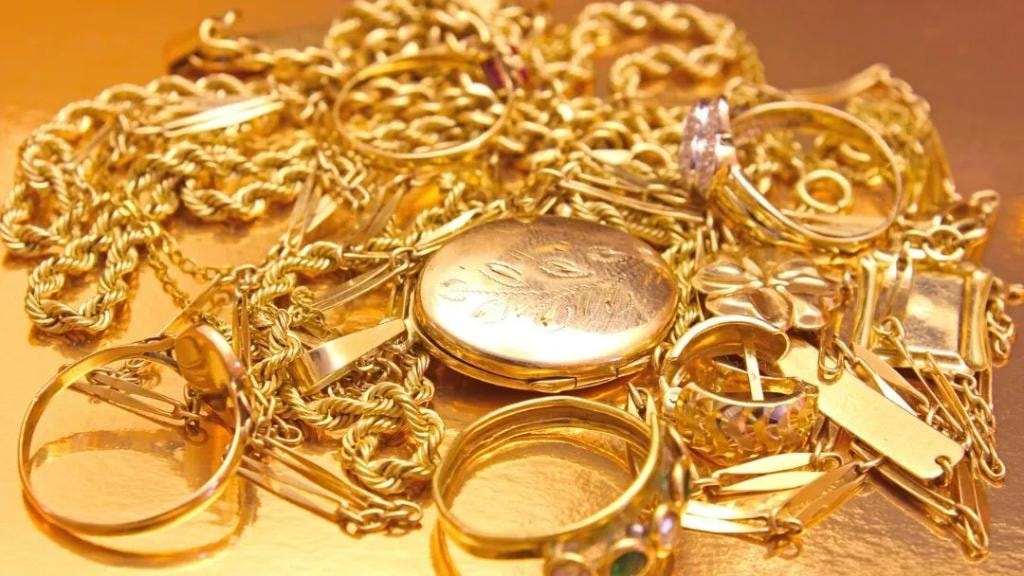
Selling Gold Jewelry: A Complete Guide to Karat, Value, and What to Expect
Gold jewelry is valued by testing its karat purity with an XRF spectrometer, weighing the piece in grams, and calculating the result against the current gold spot price. A reputable buyer pays 75 to 95 percent of that calculated value.
Most people sell gold jewelry once or twice in a lifetime. The process is unfamiliar, the terminology is technical, and the range between what different buyers will pay for the same piece can be dramatic. This guide covers everything a seller needs to know before walking into any gold buyer: how karat relates to purity, how dealers calculate value, what diamonds are actually worth, why knife-edge pricing differences exist between buyer types, and what a fair payout looks like at today's spot prices.
Reading this guide takes ten minutes. It can easily be worth hundreds of dollars.
"Understanding how gold jewelry is valued before you sell is one of the most important steps any seller can take to protect themselves in the transaction."www.clemsoncoinsandcurrency.com/blog/what-is-my-gold-jewelry-worth
How Karat Relates to Gold Purity
Karat is the unit of measurement for gold purity in jewelry. Pure gold is 24 karat, meaning 24 out of 24 parts are gold. Every karat below 24 represents a reduction in gold content and a corresponding increase in alloying metals such as copper, silver, zinc, or nickel. These alloys are added to improve durability, since pure 24-karat gold is too soft for most jewelry applications.
The most common karat marks you will encounter in American jewelry:
The majority of gold jewelry we see in Upstate South Carolina is 10K or 14K. Higher karat jewelry, particularly 22K and above, is common in pieces originating from South Korea, Japan, India, Turkey, and other countries where cultural preference runs toward higher-purity gold. The higher the karat, the closer your payout will be to the current spot price per ounce.
| Karat | Fineness Stamp | Gold Content | Grams Needed for One Pure Ounce |
|---|---|---|---|
| 10K | 417 | 41.7% | 74.6 grams |
| 14K | 585 | 58.5% | 53.2 grams |
| 18K | 750 | 75.0% | 41.5 grams |
| 22K | 916 | 91.6% | 34.0 grams |
| 24K | 999 | 99.9% | 31.1 grams |
"Knowing the karat of your gold before you bring it in gives you a baseline for understanding the offer you receive and whether it is fair."Clemson Coins & Currency — Gold Jewelry Value Guide
Is Your Gold Solid, Plated, or Gold-Filled?
This distinction matters enormously and is one of the most common sources of disappointment at the counter.
Solid gold jewelry is gold all the way through. Traditional rings, necklaces, bracelets, and earrings in 10K, 14K, 18K, or higher are typically solid gold and carry full precious metal value based on their weight and karat.
Gold-filled jewelry has a layer of gold mechanically bonded to a base metal core. The gold layer is thicker than plating but the majority of the weight is still coming from copper, brass, or another non-precious metal. Gold-filled pieces are marked with designations such as GF, 1/10 GF, or 1/20 GF. The fraction represents the gold content as a proportion of total weight, so 1/10 GF means the piece is ten percent gold by weight. These pieces have limited precious metal value.
Gold-plated jewelry has an extremely thin electrochemical deposit of gold over a base metal. The gold content is negligible and adds no meaningful precious metal value. Most costume jewelry is either gold-plated or gold-filled.
Items most commonly found as gold-filled or plated: cuff links, watch cases, lockets, buttons, pins, badge frames, and decorative accessories.
We have an XRF spectrometer on site that can non-destructively identify the exact metal composition of any piece in seconds. If you are uncertain whether your jewelry is solid gold, gold-filled, or plated, we can tell you definitively before any transaction takes place.
"The difference in value between solid gold jewelry and gold-filled or plated jewelry of the same appearance can be dramatic, and only a professional metals test can tell them apart reliably."Clemson Coins & Currency — Gold Jewelry Value Guide
What About Diamonds and Gemstones?
This is a section that most gold buyers avoid because the honest answer is not what sellers want to hear. We would rather give you accurate information than a pleasant surprise at the counter.
The diamond market has fundamentally changed. The price of natural diamonds has declined approximately 70 percent since its peak in 2011. The primary cause is the rapid development and adoption of laboratory-grown diamonds, which are chemically, physically, and optically identical to mined diamonds and are now widely available at a fraction of the price of natural stones. The secondary market for natural diamonds has contracted significantly as a result.
Very few diamonds in jewelry are individually valuable. Less than one percent of diamonds used in jewelry are of sufficient quality, size, and cut to be worth removing from the setting and selling as individual stones. The overwhelming majority of diamonds in engagement rings, wedding bands, and fashion jewelry fall below the threshold where a stone buyer would pay a meaningful premium.
The practical implication for sellers: in most cases, you will receive more money for your diamond jewelry by selling the entire piece on its gold weight than by attempting to sell the stone separately. The gold provides the reliable floor value. You would need a large size diamond 1 carat and higher to have a meaningful value placed on the diamond. Smaller stones have value but it's not what most people believe they are. We can remove the diamonds and just purchase the gold and you can find a diamond buyer but at the end of the day, we can most likely satisfy you with a fair offer for both the gold and diamond(s).
We are happy to discuss your specific piece in person and give you our honest assessment of where the value lies.
Understanding Bullion vs. Jewelry: Why Gold Jewelry Sells at a Discount
This is the most important concept in gold selling and the one sellers are most frequently unaware of going in.
Bullion refers to gold in its most tradeable form: coins and bars produced to a fineness of 99.9 percent or higher. Bullion is standardized, easily verified, and traded globally at or very near the spot price. A one-ounce American Gold Eagle or a one-ounce gold bar typically sells at 94 to 99 percent of the current spot price because it requires no further processing to reach the market.
Jewelry is not bullion. Gold jewelry must be refined and processed before it can re-enter the bullion market. That refining process costs money and time, and that cost is reflected in the discount a jewelry buyer applies relative to spot price. A reputable gold buyer working at competitive margins should be paying 85 to 95 percent of the gold value calculated from the piece's weight and karat. Buyers paying less than 80 percent are leaving too much on the table for the seller.
"Understanding the difference between bullion pricing and jewelry pricing is the single most useful thing any gold seller can learn before walking into a buyer."Clemson Coins & Currency — Gold Jewelry Value Guide
Why Pawn Shops and Jewelers Pay Less for Gold
Pawn shops and jewelers are legitimate businesses that serve important community functions. But neither is structured to be a competitive buyer of gold jewelry, and understanding why will help you make a more informed decision about where to sell.
Pawn shops operate a dual business model: retail resale and collateral lending. Their primary profit center is pawn loans, where items are held as collateral against short-term cash loans. When they do buy outright, they are purchasing at steep discounts because their business model is built around customers who need cash immediately and have limited alternatives. Many pawn shops pay less than 50 percent of the calculated gold value on jewelry. Moreover, many pawn shops sell their gold scrap to us.
Jewelers make their margin selling new and estate jewelry to consumers. They are not in the business of buying scrap gold, and when they do, they typically require a substantial discount to justify the administrative cost of handling pieces they cannot resell as-is. Many jewelers we know refer gold sellers directly to us precisely because they do not want the complexity of valuing and purchasing scrap jewelry. Their core business is selling, not buying. And, we purchase gold from many jewelers throughout the Upstate.
A dedicated precious metals dealer has lower acquisition costs, established refinery relationships, and a business model that allows for significantly higher payouts on gold jewelry than either of those alternatives.
"The difference in payout between a pawn shop and a dedicated precious metals buyer is frequently dramatic, and the only way to know for certain is to get competing offers before you commit."www.clemsoncoinsandcurrency.com/blog/sell-jewelry-vs-pawn-shop
How Gold Jewelry Is Valued: The Three-Step Process
The valuation process for gold jewelry is straightforward and takes minutes for most pieces.
Step one: Test the purity. An XRF spectrometer reads the elemental composition of any metal non-destructively in seconds, confirming the exact karat and identifying any plating or unusual alloy content.
Step two: Weigh the piece. The piece is weighed on a precision scale. For items with non-gold components such as stones, clasps, or decorative elements that are not gold, those components are accounted for in the weight calculation.
Step three: Calculate the value. The weight in grams is converted to troy ounces, multiplied by the karat purity factor, and multiplied by the current spot price. The offer is a percentage of that calculated gold value based on current market conditions and the buyer's refining cost structure.
A single gold class ring takes less than 90 seconds to value. A full jewelry box with mixed pieces typically takes 15 to 30 minutes to sort, test, and calculate. Items are separated into solid gold, gold-filled, plated, and non-precious categories before any offer is presented.
Gold Jewelry From Estates and Inherited Collections
Gold jewelry turns up regularly in estate situations alongside coins, silver, currency, and other valuables. If you are working through a loved one's estate and the jewelry box contains a mix of fine jewelry, costume jewelry, class rings, watches, and gold pieces, the most efficient approach is to bring everything in together. We separate the categories, test what needs testing, and make offers on everything at the same appointment.
"When an inherited collection includes gold jewelry alongside coins and silver, bringing everything in together is always the most time-efficient approach and ensures nothing gets overlooked."www.clemsoncoinsandcurrency.com/blog/what-to-do-with-inherited-coin-collection
"For larger estate situations with multiple categories of valuables, understanding the full evaluation and sale process before you come in will set realistic expectations."www.clemsoncoinsandcurrency.com/blog/how-to-sell-estate-collection
If your estate also includes coins, silver coins, sterling silver, or paper currency, If your estate also includes coins, silver coins, sterling silver, or paper currency, we make offers on all of it at the same appointment with immediate payment.
Serving Upstate South Carolina, Northern Georgia, Western North Carolina, and Eastern Tennessee
We evaluate and purchase gold jewelry from sellers throughout the region. Our central Pendleton location is an easy drive from Greenville, Anderson, Clemson, Easley, Pickens, Lake Keowee, and Seneca. We also regularly work with sellers from northern Georgia, western North Carolina, and eastern Tennessee. Call ahead if you want to discuss your pieces before making the trip.
Clemson Coins, Currency and Bullion
7611 HWY 76, Pendleton, SC 29670
Frequently Asked Questions
How is gold jewelry valued?
Gold jewelry value is calculated from three inputs: the karat purity of the gold, the weight of the piece in troy ounces (excluding non-gold components), and the current spot price of gold per ounce. A reputable buyer uses an XRF spectrometer to confirm purity, weighs the piece on a precision scale, and calculates the offer as a percentage of the resulting gold value. The process takes less than two minutes for most individual pieces.
What is a fair percentage to receive when selling gold jewelry?
A competitive and reputable gold buyer should pay between 85 and 95 percent of the calculated gold value based on current spot price, karat, and weight. Offers below 80 percent represent an above-market margin for the buyer. If you receive an offer significantly below that range from any buyer, it is worth getting a second opinion before selling.
What does karat mean on gold jewelry?
Karat measures the purity of gold in a piece of jewelry. Pure gold is 24 karat. Ten-karat gold is 41.7 percent pure gold by weight. Fourteen-karat gold is 58.5 percent pure. Eighteen-karat gold is 75 percent pure. The remaining percentage in each case is composed of alloying metals added to improve durability. The higher the karat, the greater the gold content and the higher the payout per gram of weight.
Is gold-plated jewelry worth anything?
Gold-plated and gold-filled jewelry has very limited precious metal value because the gold content is minimal relative to total weight. Gold-plated pieces have an electrochemically deposited layer of gold that is too thin to contribute meaningful melt value. Gold-filled pieces have a thicker bonded layer but the majority of the weight remains non-precious base metal. Both categories are worth considerably less than solid gold jewelry of the same apparent size and weight.
Are diamonds worth anything when selling gold jewelry?
In most cases, the diamond stays with the gold. Less than one percent of diamonds in jewelry are of sufficient quality to be removed and sold individually at a meaningful premium. The natural diamond market has declined significantly since 2011 due to the widespread adoption of laboratory-grown diamonds. For the vast majority of jewelry, the gold weight provides the reliable floor value and the stone contributes little to nothing additional.
Why do pawn shops pay less for gold jewelry?
Pawn shops operate primarily as collateral lenders and retail resellers. Their business model requires purchasing items at steep discounts to support both their loan margin and their retail resale margin. Many pawn shops pay less than 50 percent of the calculated gold value on jewelry. A dedicated precious metals buyer with established refinery relationships has a lower cost structure and can pay significantly more for the same material.
How long does it take to sell gold jewelry?
A single piece such as a class ring takes less than 90 seconds to test, weigh, and value. A full jewelry box with mixed pieces typically takes 15 to 30 minutes to sort into categories, test the uncertain pieces, weigh the solid gold items, and calculate the offer. Payment is immediate on the spot.
Where can I sell gold jewelry near Greenville or Anderson SC?
Clemson Coins, Currency and Bullion in Pendleton, SC buys gold jewelry in all karat weights from sellers throughout Upstate South Carolina. Located at 7611 HWY 76, Pendleton SC 29670, serving Pendleton, Greenville, Anderson, Clemson, Easley, Pickens, Lake Keowee, and Seneca, as well as northern Georgia, western North Carolina, and eastern Tennessee. All evaluations are free, offers are made on the spot, and payment is immediate.
Ready to sell your gold jewelry?
Call ahead or walk in. All evaluations are free. Payment is immediate on the spot.
Call 864-502-0100Get a Free Gold Jewelry Evaluation
Send us a message and we'll get back to you quickly — or call to speak with us directly.864-502-0100 to speak with us directly.